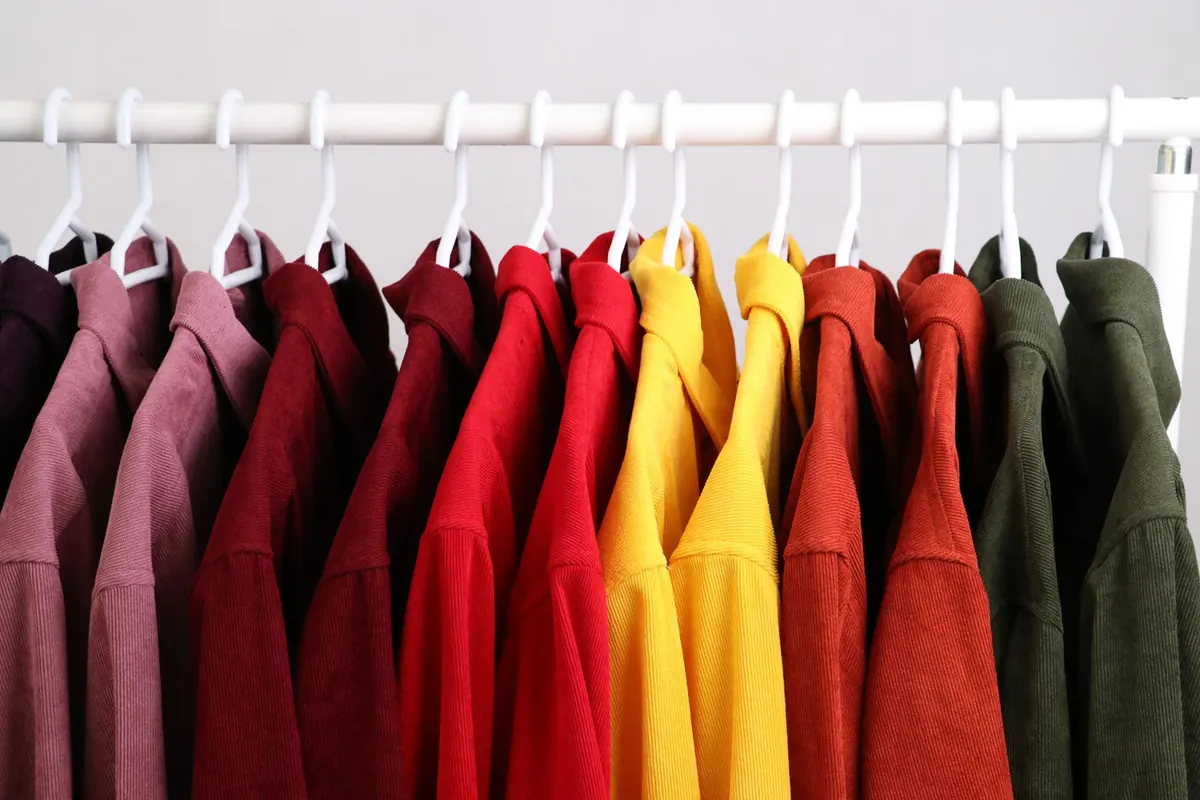
Spring is the most difficult season to dress for. It's 48 degrees and drizzling when you leave the house, and by three in the afternoon you're carrying your coat over one arm and regretting the wool sweater. A capsule wardrobe doesn't fix the weather, but it does fix the panic: when every piece in your closet works with every other piece, getting dressed stops being a daily negotiation.
The goal here isn't owning less for the sake of owning less. It's building a small set of spring clothes that covers your real week, survives temperature swings, and gives you roughly fifteen outfits without a single new idea required at 7 a.m. Here's how to do it from scratch.
What a spring capsule actually is
A capsule is a working wardrobe, not a museum collection. For most people, spring means somewhere between 20 and 30 items: tops, bottoms, layers, shoes, and a few accessories that all pull in the same direction. Everything should pair with at least three other things you own. If a piece only works with one outfit, it isn't part of the capsule — it's a costume.
Two things it is not. It is not a uniform, and it is not a reason to throw away everything you like. Start with what you already wear on repeat, then fill the gaps. The first version of your capsule will be about 70 percent things already hanging in your closet. That's normal and it's the point.
Start with your spring, not someone else's
A capsule built for a temperate city looks nothing like one built for a place where April is already 85 degrees. Before you make a list, answer four questions honestly:
- Weather: What's the actual temperature range from March through May where you live? Layers matter more in a 30-degree spread than in a 10-degree one.
- Week: Where do you physically go? Office, campus, site visits, school pickup, three video calls and a grocery run — each has different demands.
- Dress code: Is there a floor you can't go below? If you need closed-toe shoes or a collar, plan for it instead of fighting it.
- Laundry: If you wash once a week, you need enough tops to last seven days without panic. If you wash twice a week, you can own fewer.
Write the answers down. They'll settle most arguments you have with yourself in the fitting room.
The beginner's checklist: about 22 pieces
Adjust the numbers to your climate, but keep the categories. The ratios matter more than the exact count.
Tops (6)
- Two plain tees, one in a neutral, one in a color you genuinely enjoy
- One long-sleeve striped or plain knit top for cool mornings
- One white or light blue button-down
- One fine-gauge cardigan or pullover that layers flat under a jacket
- One dressier blouse in a fabric that drapes rather than clings
Bottoms (4)
- Straight-leg jeans in a mid-blue wash — the most versatile single item in the capsule
- Tailored trousers in a neutral that isn't black, so they read lighter for spring
- A midi skirt, either bias-cut or softly pleated
- One wider-leg or cropped option for warm days
Layers (4)
- A trench or lightweight long coat
- A denim or chore jacket
- A relaxed blazer
- A light knit or overshirt for the in-between days
Shoes and accessories (6–8)
- White leather sneakers, a loafer or flat, and one open shoe for warm afternoons
- A belt, a tote that fits your daily carry, sunglasses, and a scarf or bandana if you like them
Notice what's missing: nothing here only works on a single occasion. That's the whole test.
Balancing color without getting bored
The simplest structure for beginners is two core neutrals, one secondary neutral, and two accents.
Your core neutrals are the colors you'd wear three days a week: cream or ecru and deep navy, for example, or soft grey and camel. The secondary neutral sits between them and adds texture — mid-blue denim, taupe, or olive. Your two accents should be far enough apart to feel different: one warm, like tomato red or butter yellow, and one cool, like sage or sky blue.
Then apply the 60/30/10 proportion. Roughly 60 percent of your wardrobe is core neutral, 30 percent is the secondary, and 10 percent is accent. This is why a single bright skirt can carry an entire spring — it's the only loud thing in the room, and it works because everything else is quiet.
One rule saves a lot of money: every accent piece must coordinate with both of your core neutrals. If it only works with one, you'll wear it twice and forget it.
Fifteen outfits from five formulas
You don't need fifteen separate ideas. You need five shapes, each worn three ways. Here are the formulas:
- Jeans + tee + third piece. Swap the third piece (jacket, cardigan, blazer) and the shoe, and you have three distinct outfits from one base.
- Trousers + knit + trench. Change the knit color, tuck or untuck it, and the formality shifts.
- Midi skirt + blouse + flats. Add a denim jacket for daytime, a blazer for anything that requires a little more polish.
- Dress + light layer. One simple dress plus a different topper each time is genuinely three outfits, not one.
- Wide-leg bottoms + button-down + tank. Wear the shirt buttoned, open over the tank, or knotted at the waist.
Five formulas times three variations equals fifteen. Swap one element at a time — the layer, the shoe, or the accent — and resist the urge to change everything at once. The reason this works is that your palette is already doing the coordinating for you.
Three traps to avoid
Buying for a fantasy life. If you haven't worn heels in a year, don't build a capsule around them. Dress the life you have.
Ignoring fabric weight. Spring rewards light layers and punishes heavy ones. A thin merino knit earns its place; a chunky cable knit won't leave the house after April. Similarly, a cotton trench you can fold into a bag beats a structured coat you're stuck carrying.
Buying everything at once. Purchase in two waves, a few weeks apart. You'll learn what's actually missing instead of guessing.
Make it earn its place
Once your capsule is hanging together, wear it for two weeks before you buy anything else. Keep a running note of the moments it failed you — the day you had nothing for a 50-degree morning, the evening you needed one slightly dressier top. Those notes are your shopping list. Everything else is noise.
By the end of spring you'll know two things: which five pieces you reach for constantly, and which two you keep moving out of the way. Keep the first, replace the second next year, and the capsule gets sharper every season.
Photo: Jometo Design / Pexels